
"banana farming"
900 article(s) found
A brief introduction to the Market Price of Essel washing Sidamo sidamoG2 Fine Coffee Bean varieties
Variety: local native flavor: honey, citrus, lemon there are still a large number of wild Arabica coffee trees growing in many parts of Ethiopia, growing at an average altitude of 4200-6800 feet. Banana trees are generally planted for shade, but there is less use of herbicides and pesticides due to lack of agricultural technology. Coffee

Characteristics of Colombian coffee beans A brief introduction to the varieties of manor produced by grinding scale flavor treatment method
A brief introduction to the varieties of Colombian Coffee beans by Grinding scale Flavor treatment method Coffee cultivation in Colombia is mostly of small farm type, with an average of about 3000 coffee trees per coffee farm, mostly using mixed three-dimensional planting, that is, in the coffee tree seedling period, trees, bananas and other vegetation are planted around coffee trees to provide a cool and humid environment for coffee production.

The coffee producing countries of Puerto Rico are mostly concentrated in the mountains of the island.
In Utuado, the heart of the coffee producing area, the University of Puerto Rico also offers courses for farmers to teach them how to optimize production, and soil experts guide people in the fields to cultivate quality coffee to increase product value and increase income. In the university laboratory, they have also set up a coffee tasting room to give growers a better understanding of their products. Professor's Cup

Floral fragrant Panamanian Kasha Coffee Manor flavor and taste characteristics of Panamanian coffee
Casa Louis Manor, Panama, founded in 1920, is located in the Boqui specialty area of Mount Baru, located in the Poquet Valley of the Balu Volcano in northwestern Panama. After three generations of coffee planting experience, the family combines more than 300 local small family farms, small farm coffee farmers join partners from planting, post-processing, baking and marketing, unlike only

What are the brewing steps of Sidamo sidamoG2 Coffee
Professional barista communication please pay attention to the coffee workshop (Wechat official account cafe_style) there are still a large number of wild Arabica coffee species growing in many parts of Ethiopia, with an average of 4200-6800 feet above sea level, and now there is a tendency to cultivate a small amount of banana trees for shade, but due to the lack of agricultural technology, there are fewer herbicides and farmers.

What coffee producing areas are there in Tanzania to promote Moshi production?
Professional Coffee knowledge Exchange more information on coffee beans Please follow the coffee workshop (official Wechat account cafe_style) Coffee was introduced into Tanzania from Ethiopia in the early 16th century, but it was not until the end of the 19th century that it was promoted by German missionaries. There are 11 coffee producing areas in Tanzania, and when it comes to Tanzanian coffee beans, it must be the most famous Kilimanjaro coffee.

Ethiopia washed Sidamo sidamoG2 boutique coffee beans, brand recommendation and manor
Professional barista communication please pay attention to the coffee workshop (Wechat official account cafe_style) there are still a large number of wild Arabica coffee species growing in many parts of Ethiopia, with an average of 4200-6800 feet above sea level, and now there is a tendency to cultivate a small amount of banana trees for shade, but due to the lack of agricultural technology, there are fewer herbicides and farmers.

What's the taste of Sidamo sidamoG2? how do you brew Sidamo coffee?
Professional barista communication please pay attention to the coffee workshop (Wechat official account cafe_style) there are still a large number of wild Arabica coffee species growing in many parts of Ethiopia, with an average of 4200-6800 feet above sea level, and now there is a tendency to cultivate a small amount of banana trees for shade, but due to the lack of agricultural technology, there are fewer herbicides and farmers.

In 2010, Brazil COE ninth Fazenda Paraiso Paraiso Manor won the award.
Professional barista exchanges please follow the coffee workshop (Wechat official account cafe_style) 2010 Brazil COE National Coffee Competition 9th Fazenda Paraiso Paraiso award-winning batch of coffee was first introduced to Brazil in the early 18th century, in 1727 the Brazilian government sent a personable army officer to mediate the border dispute, coffee seeds from French Gaiana

El Salvador Concordia Manor Information El Salvador sun beans strong fruit tone
Professional barista exchanges please follow the coffee workshop (Wechat official account cafe_style) La Concordia H.I.U El Coffee has always been one of my personal favorite coffee producing countries, before has been very fond of bluebells manor (Finca La Companula Estate) beans, in addition to his name poetic charm, C.O.E award-winning manor's blessing
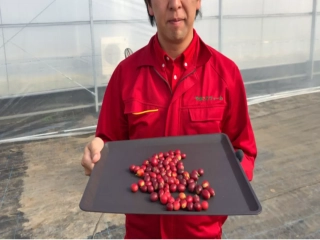
Coffee bean trees can also be grown in Japan! The first batch of Japanese-made coffee beans came out!
Growing coffee locally has been something that generations of Japanese have been pursuing. Due to topography, climate and other reasons, Japan's local natural environment is not suitable for growing coffee. In winter, because it is too cold, it is difficult for coffee trees to survive. Even if they do, they will not be able to blossom and bear fruit.

Ecuador Coffee status 2016 Ecuador Coffee-Taza Dorada Robusta Championship
Professional barista exchange please follow the coffee workshop (Wechat official account cafe_style) Ecuador 2016 Taza Dorada Robusta competition champion in July last year, Ecuador held the first national boutique Robusta bean competition Taza Dorada Robusta, the founder of Paradise Bakery was invited to serve as the judge. All the winners of the finals

Panamanian Jensen Manor single bean variety, brand recommendation and manor introduction
For the exchange of professional baristas, please pay attention to the coffee workshop (Wechat official account cafe_style) Jensen Manor Jensen Manor single bean species, brand recommendation and manor introduction this batch of Jensen Manor Blue Standard washed geisha cups are tested as follows: Fragrance: jasmine, berry, citrus, banana, peach, mango (Aroma): wild ginger, cantaloupe, lemon

La Minita Farm in Costa Rica Coffee region
In Costa Rica, coffee fruit Tarasu is unloaded from ox carts in the south of the country's capital, SanJos, and is one of the country's most valued coffee growers. LaMinitaTarrazu coffee is a famous local product, but its production is limited, about 72600 kilograms a year. It is grown on a piece of land called LaMinita.

How does Panama, which accounts for less than 1% of coffee production, become a household name?
Professional barista exchanges please follow the coffee workshop (Wechat official account cafe_style) Panamanian characteristics as a coffee exporter's world status: 32 sacks (60kg) annual exports: 120000 percentage of the world coffee market: less than 1% other major agricultural exports: bananas, tropical fruits, melons typical varieties: Typica,Caturra,Catuai, bourbon

Panama Jensen Manor Coffee Bean Flavor describes how to drink Jansen Manor Coffee
For the exchange of professional baristas, please follow the coffee workshop (Wechat official account cafe_style) Jensen Manor coffee bean flavor description of Jansen Manor coffee how to drink this batch of Jensen Manor Blue Standard washed geisha cups are as follows: Fragrance: jasmine, berry, citrus, banana, peach, mango Aroma: wild ginger, cantaloupe

Flavor and taste characteristics of Costa Rican coffee manor known as "extra hard beans"
A few years ago, when Coopedota's 800 farms suffered surprisingly low yields, Marta began to study weather and climate change. At first I was just scared; but then I became angry. He said. After he sent a representative to the United Nations climate change conference in Cancun last fall, Marta became even angrier because at that conference, he tried to control greenhouse gases and take action to mitigate them.

A brief introduction to the origin, development, history and culture of Costa Rican Saint Roman boutique coffee beans with pure flavor.
Costa Rica's volcanic soil is very fertile and well drained, especially in the central plateau CentralPlateau, where the soil consists of successive layers of ash and dust. Costa Rica was therefore the first country in Central America to grow coffee and bananas for commercial value. Coffee and bananas are the country's main exports. Allah is grown in Costa Rica.

Introduction to the description of the characteristics of grindability and flavor of Coffee in Xida Mochizo producing area
Coffee is Ethiopia's main economic crop and the country's largest crop export and important industry. It accounts for 60% of Ethiopia's total export value and supports many small farms, as well as sugar, bananas and cotton. It is also Ethiopia's largest and important commodity export crop after oil, and it is also the largest export of Elaraby in Africa, in 1997.

Introduction to the coffee beans and flavor characteristics of Galapagos Alcatraz coffee beans in Ecuador
Professional coffee knowledge exchange more coffee bean information please follow the coffee workshop (Wechat official account cafe_style) Ecuadorian coffee coffee: Ecuador is an island country in South America, coffee cultivation has a long history, about the beginning of the 19th century, Ecuador coffee compared to bananas, oil, shrimp and so on was never listed as a major source of income, but there are enough mountains on the island.